Tuesday, November 26, 2013

Buckets of Mud Pies


As someone who has done lots of ministry work with teenagers, I probably feel older than most people would consider 28 to be, though of course I know it's too early to write off the rest of my life.

But I can write it off entirely in one sense, because it's not mine. I am not my own, I've been bought for a price, and I serve a risen Lord who has more claim to my allegiance and obedience than any earthly ruler or parent ever could have.

We speak (more or less seriously, depending on the person) about a bucket list, and all the things we want to accomplish before we die. I don't have any actual list written down, but as a goal-oriented person, I certainly have things I'd like to experience in this life, both near and short-term. But from time to time I am reminded:


God doesn't care about my bucket list.


He cares for me, without question. More than I love myself; more than I can fathom. But as for my somewhat randomly-assembled little list of life goals, skills to master, things to do, places to see- God will see to it that I accomplish very little on that list.

We (especially in America, perhaps) are used to what we want being considered very important. Self-actualization has been elevated to the level of a religious doctrine. Even whole sections of the church have gone over to the side of Self, proclaiming that God eagerly desires to help you accomplish your goals.

This is false. God wants to help you die to yourself, and live for Him.

The process will really feel like dying at times, because it is; part of you -the old part which at this point you have trouble distinguishing from the new, glorious person into whom God is changing you- is being killed off, and it hurts like the pangs of death. But then, having submitted to God's surgical fire, what's left of you takes a deep breath, and tastes eternal air you've never before breathed. There is nothing in this life that compares to it.

As C.S.Lewis memorably wrote:
“It would seem that Our Lord finds our desires not too strong, but too weak. We are half-hearted creatures, fooling about with drink and sex and ambition when infinite joy is offered us, like an ignorant child who wants to go on making mud pies in a slum because he cannot imagine what is meant by the offer of a holiday at the sea. We are far too easily pleased.” (From 'The Weight of Glory')

Our bucket lists, harmless as they may be, are full of mud. As materially blessed people who do not have to constantly be concerned for our own survival, we think of the best, most fun and most rewarding goals we can, and decide we're entitled to at least a shot at them. "endowed by their Creator with certain inalienable rights, among these... the pursuit of happiness," it's in the American Declaration of Independence, enshrined in our national and cultural DNA.

Apologies to our founders (who I'm aware were focused on rebuking earthly tyranny), but God is not primarily concerned with the inviolability of your pursuit of happiness; He is busy violating it. He sacrificed even Himself out of love for you, and intends to purify you into a son or daughter who can enjoy the eternal joy of His presence. That process means you will forgo much, much earthly happiness, even some of those things which those outside (and often inside) the Church claim make life worth living.

I personally believe that if you have never, in faith, given up something you didn't think you could live without, you haven't really tasted the presence of God in its fullness.

As the Apostle Paul says in 1 Corinthians 15, if there is no resurrection and this life is all we have, Christians are to be pitied more than anyone else. Since I started down the path of full-time missions work, the truth of that statement has been driven home repeatedly. At no time previous did I know so many people doing so many fun things around the world. In our current culture it is extremely difficult to be young, single, well-educated, well-connected internationally, and dying daily for Christ, without falling prey to discouragement.

(May I one day be so alive in Christ and so dead to myself that the joy always outshines the discouragement, but I hear from my older and wiser brothers and sisters in Christ that the struggle does not ever quite end in this life.)

But in my discouragement, God reminds me that I am chasing after the mud pies Lewis mentioned. Sure, the mud pies might be fancier than they were, with little encrusted pebbles and even a shiny trinket or two, but God is calling me away from it all, to Himself.

So I probably won't get to attend a World Cup match or the Olympics, won't get to tour Europe, won't get to learn a dozen languages, won't get to indulge my passionate desire to learn as much about the whole world as I possibly can in one lifetime. But to the extent that I long after those things, and not after Christ, those things are stumbling blocks, idols that God will mercifully deny me the opportunity to worship.

To the extent that I long after Christ and not those things, they will recede in importance behind knowing, obeying, and exalting Him, and making Him known among the nations. This is how earthly dreams die a supernatural death. And those dreams which distract us from God should die; to say otherwise is to make Him less than Lord in our life.

Many Christians have remained in sin trying to avoid bad behavior but not having something with which to replace it. But nature abhors a vacuum, and so does human nature; if we do not have a passionate, all-consuming desire for the glory of God, we won't gain it by simply ceasing to want earthly things. This is why sanctification is a process; God slowly refines us, taking away the lesser, earthly desires and replacing them with the relationship with Him that He created us to enjoy. This is a process in which we must participate with Him, and from which, if we are really in Christ and not drowning in the world's distractions (as difficult in today's culture to escape as they ever were, I believe), we should not drift away. (Hebrews 2:1)

I don't write this to say that doing fun things is wrong. I don't write this to say you shouldn't have goals or plans that are fun and rewarding. I write this because I am distressed by the number of Christians, especially my fellow young-professional-aged Christians, that I see who are believers but living life along the default path of success, fun, or comfort, not realizing God calls us to something much more difficult (far too difficult... impossible without Him) and infinitely more rewarding.

It won't be going to live on the other side of the world for most people (it will for some, maybe you!), but it will always look like waking up and recommitting to being a living sacrifice every day. You'll never see the amazing things God can do if you don't forsake your comfort zone to see them. (I don't say this from a position of superiority; seven years ago I was busily arranging my life to ensure maximum future comfort. It was God that invaded and kicked me out into an uncomfortable place of faith, praise Him.)

"Therefore, I urge you, brothers and sisters, in view of God’s mercy, to offer your bodies as a living sacrifice, holy and pleasing to God—this is your true and proper worship. Do not conform to the pattern of this world, but be transformed by the renewing of your mind. Then you will be able to test and approve what God’s will is—his good, pleasing and perfect will." (Romans 12:1-2)

Take a chance right now. Pour out your bucket list on the altar, and surrender your life to God. If you follow after Him, He will lead you to places and work through you in ways you never dreamed of, for His glory, and your indescribable joy.

Monday, November 25, 2013

Thanksgiving Update + Visa Approval

Just wanted to do a short entry to thank everyone who reads this blog, and especially those who comment.
Thanks for making November my highest traffic month yet!

Also, I am happy to announce that after much paperwork and weeks of waiting, I have gotten approval for my volunteer visa from Taipei. Hopefully my frustrating experience with attempting to obtain a religious visa and our subsequent solution of a volunteer visa will be a good model for future missionaries caught in this situation to follow, but it's in the nature of living abroad for these things to happen, and the whole visa situation never stops fluctuating. Either way, as I noted in a previous post, I have a lot to be thankful for despite the delay, and got to see God do lots of things in the meantime.


Finally! I think I lost two years' worth of stress-induced aging when I got the news...
(This picture is sort of a collage; didn't want to post the actual docs online)


Thanksgiving is much more than merely a day to overeat and watch TV to mark the commencement of the holiday season. I hope we can push back against consumerism and remember that a day to focus on how much we are blessed is not only a personal duty (gratitude to God), but probably would do something for national sanity in the U.S. A time to remember that societal instability and economic malaise may presently describe us, but need not ever define us.

The value of a "day of gratitude" is not lost on many Taiwanese people, and it seems that many churches in Taiwan are adopting the holiday as well! (The Mandarin is more or less a direct translation which backtranslating into English comes out to something like "Gratitude Day") Due to the previous visa delays I won't be spending this Thanksgiving in Taiwan to report on the festivities, but my family is certainly happy to have me for one more holiday.

As I don't have the visa itself yet and still have to negotiate that with the Atlanta office that's been quite difficult to deal with, I don't have a departure date yet, but looks like Christmas is likely to be spent in Taiwan. Last time I was in Taiwan for Christmas was in 2007. Taiwanese families typically don't celebrate it (unless they are Christians), but Taipei City was festive for the season:

Downtown Taipei after Christmas, Dec 2007
A little blurry, but you can see the super-tall Taipei 101 building lit up colorfully.
Expect better quality pics if I make it there for the Western holiday season this year.


Thursday, November 7, 2013

When God Says No - Revisited

So a couple of months ago I wrote a post about when God says no, investigating how we can't always understand why God says no in certain circumstances, but we know He is using everything to bring us closer to Himself.

Sometimes we don't get to find out why God said no; sometimes it goes against all human emotion and reason to think that God could possibly say no in a given situation. I try to address those thoughts in that post.

But sometimes we do get to see in hindsight why God said no.

The context of this post is that I just found out today that my Taiwan visa has been delayed yet again, due to a different part of the Taiwanese government having assumed responsibility for handling volunteer visa applications.

To be blunt: This sucks. I've waited an additional two months in limbo, the narrative of my life seemingly on hold (right before my life situation changes dramatically), not allowed to get to the mission field where my heart is. I long to begin ministry there. I'm missing a Taiwanese friend's wedding we thought I'd surely be able to attend. I'm not able to be immersed in the language I'll need or to begin building (and reconnecting with some of) the relational networks through which things are accomplished in Taiwan.

Also, this isn't even as good a visa as I was going to get before the Atlanta office flat out denied me one for reasons they didn't feel necessary to straightforwardly explain. Now even the inferior visa is becoming mired in bureaucratic entanglements. If I had a dollar for every time someone said "why aren't you in Taiwan yet? I thought you were already there!", I'd be rapidly approaching taxable income.

(And while we're being very honest and direct, please don't tell people in my situation "this is God teaching you patience" unless you'd like people to tell you "this is God teaching you to not love money" when you lose your job. It's great to remind people that God has a purpose in delays, but maybe stay away from anything that seems to roll off the tongue too easily in these situations. It's advice I need as much as anyone else.)

So emotionally and psychologically, that's where I was this morning. Actually it was briefly even worse than that. The temptation to bitterness "Ok God, what did I do wrong this time? For which of my sins are you punishing me?" was strong for an hour or two. It's hard to explain the pain felt by a missionary with a call to a place and people who's prevented from Going to them. It's not that you foolishly think God needs you to do anything there, it's that in a special way God has anchored your heart and purpose there and you're bungee-corded to them, and the stretch begins to ache.

However
. Just as I said before, whenever I tried to do something within scriptural guidelines but God changes my plans, I have seen Him work in ways that I wouldn't have seen if my own plan had worked out.
In my particular case, rather than punishing me for my complaining and lack of trust, God graciously allowed me to see some of what He was accomplishing by my delay. Just a few of the opportunities I've had a chance to participate in since I wasn't able to leave at the beginning of September include:

  • Preached a Sunday night service at my sending church, encouraging everyone with the reminder that Rev 7 tells us the Great Commission -will- be fulfilled, and how that is happening all over the world right this moment.
  • MC'd a multi-church youth event in Plano and shared the gospel in detail with all the attending Asian American students before leading them through a prayer of repentance and acceptance and encouraging believers to recognize Christ's primacy in their lives.
  • Discussed theology with Buddhists trying to convert me, learned a lot about Buddhism and challenges I will face in explaining the gospel in that religious context.
  • Ended up in conversations with several people about barriers that were keeping them from believing in God.
  • Visiting several Chinese churches, including sharing my Taiwan plans with a new (to me) fellowship who are interested in partnering with me and updating many people on my plans and asking them to pray for Taiwan.
  • Discovered a few other people looking to do ministry in Taiwan.
  • Connected with a representative from an American church potentially interested in long-term ministry cooperation in Taiwan.
  • Said my goodbyes to a lot of people. I know I'll probably never see some of them again on earth, but I look forward to our reunion in the presence of our Lord.
Apparently at least one of those things needed to happen before I went to Taiwan! Or maybe something else I didn't even attach much importance to... some seemingly offhand remark to a student who will later become a missionary, some encouragement that was what someone desperately needed to hear. It's impossible to know. But God is always working through what we do in faithfulness to Him, and we'll never know how much He's accomplishing behind the scenes.

After asking for prayer on facebook (and getting some) and doing some honest talking with God, I'm happy to be able to say that He chose to set off a volcano of encouragement in my spirit that burned away my doubts and gave me the motivation to move forward, not just existing until I can leave, but living intentionally through the time. He loves us like that.

So now I'm delayed again. I'll be doing Thanksgiving in the US, and hopefully heading out shortly afterwards. Honestly I don't know what the purpose is in this further delay, but it's harder to doubt God has a purpose when I can clearly see His hand at work in the previous delay.

That doesn't make it easy, but I know others have it harder. And I will pray for the strength to live every day for God until things start moving again. And if you need it, I'd be happy to pray for you too.

Wednesday, November 6, 2013

10 Things I Will Not Miss about America while in Taiwan (And Why)

Ok, so earlier I posted about 10 things I'd miss from America, so now it's time for the other side: 10 things that I won't miss from America, and how the Taiwanese lifestyle is different in those areas.

Read First:


1. I went through a long period of prayer and reflection before I decided to do missions in Taiwan, partly to make sure that I wasn't moving there just because of the things I enjoy about living in Taiwan. To see how I reached my decision, go back and read my "Why I'm Going to Taiwan" posts. I do love Taiwan, but would most likely never have moved away from the US if not for God's calling and provision, and only discovered some areas where I thought my Taiwanese lifestyle had the advantage over America after following God's leading across the Pacific.

2. For my American friends: Don't be offended~ I am not saying either Taiwan or America is "better." Think of this list as perks of life in Taiwan that I have discovered while doing ministry there. If some of these don't sound very nice to you, you can appreciate the lifestyle you currently have a little more, or come visit me and figure out what I'm talking about!

3. For my Taiwanese friends: I have noticed most American students visiting Taiwan really enjoyed it and appreciated Taiwan in various ways. I believe this appreciation of Taiwan is not based on the patronizing attitude that was common in the past from Westerners visiting Asia (and is sadly still around), but from a genuine enjoyment of encountering a culture that is strong on certain points on which Americans feel their culture has become weak. So the reaction is less often "Oh, how quaint" and more often "Hey, I wish we had something like this in America too."

4. As before, these are numbered for clarity but not in any particular order.

I will not miss...


1. Unhealthy/Processed Food


I've been happy to see in the past few years, a growing awareness of the dangers of the S.A.D. (Standard American Diet) and a shift towards healthy and non-processed food. However the difference between your commonly available food on this side of the Pacific and the other side is still vast.

So although we have Whole Foods and the like now and healthy food has always been available to some degree, the food is better in Taiwan for a specific reason: The cheap, quick, easily available food in Taiwan is both healthier and tastier than in America.

On average, people will default to eating what's convenient, and the obesity problem in America demonstrates that the easily available food in the States is not doing us any favors. (lifestyle is another issue, but the omnipresence of high-calorie, highly processed food is a large part of the problem)

Ask anyone who has lived in Taiwan about something they miss, and without fail they will mention the food. It's consistently delicious, and because it's comparatively nutritious and the calorie-density is much lower, you feel better after eating it too. In Taiwan there are no drive-thrus (or at least I've never seen one in any city), and although several of the American fast food chains are present (McDonalds is everywhere in Taiwan and quite popular, and the service is about three times as fast), going there for most people is a fun alternate choice, not a typical meal. Fresh local fruit is plentiful, there is a lot of seafood, and every part of the island has its own local dishes to try. Processed food is a much smaller percentage of the average Taiwanese diet (when present it's usually in snacks, not as part of meals), tea is more common than coffee or soft drinks, desserts have less sugar, cheese and butter are almost nonexistent, and most places are not far from a fresh market, so what you're eating was grown or raised nearby.

Nightmarket snacks can be unhealthy (a lot of them are fried), but they're also one of the things Taiwan is world-famous for, and going to a nightmarket to eat them generally involves a lot of walking anyway.


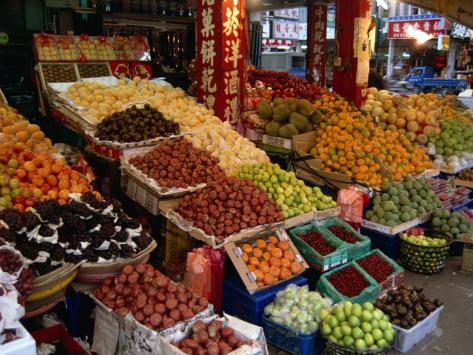
^ That fruit right there
is called bell fruit, and it's one of my favorites. It also apparently can't handle
being shipped overseas, so I can only get it when I'm in Taiwan.
One of the first things I go looking for when it's in season!

All in all, I lost almost 25 pounds in Taiwan the year I lived there, and that was eating as much delicious food as I wanted and even frequently drinking milk tea (which is an example of a common Taiwanese snack food/drink which is -not- good for you).


Not healthy: Pearl milk tea! The black 'pearls' are tapioca spheres, chewy and brown sugary.
It comes with an extra wide straw so you can get a few tapioca balls with each drink.
Sounds weird if you've never tried it, but most people like it once they do...
and millions of people are addicted to it.

2. The Lack of Mass Transit


I spent a year in Taiwan without a car, and can count on one hand the number of times I felt the lack of one. I said in an earlier post that one thing I appreciate about America is being able to cruise the highways in my own vehicle. That's still true, but in the part of Taiwan where I was living, mass transit was done so well that it was a complete transportation solution. From my front door, I could walk a short distance to a bus stop, or an even shorter distance to catch a taxi. For anyone who has lived in a place like New York City, it's similar, except the metro is a lot cleaner.

As a result, in Taiwan I walk a lot more, not specially for exercise but as part of everyday life, and in general feel a lot healthier.

Now a caveat to all of this is, at that time I was living in Taipei, which has the best mass transit in Taiwan. The largest American cities will have no lack of taxis, buses, etc. too (though being comparatively spread out means they don't function as efficiently as Taiwan's denser, more vertically inclined cities), but rural areas typically have nothing at all. Most inhabited areas in Taiwan do have mass transit of some kind, buses and trains, but in rural areas they may be infrequent and the station may be far away. So for much of Taiwan, you do need a car or scooter to get around effectively, and I expect I'll be acquiring a scooter at some point over the next couple of years. (They're a little more practical than a motorcycle for day to day use in Taiwan, and Western motorcycles were under heavy import tariffs, though I think that's changed recently.)


Another big thing is trains. I love trains, and I hope America, where we used to have so many passenger trains, gets them back in the future. They are both practical and (I think) beautiful transportation solutions; in a place as densely populated as Taiwan, trains are an effective people-mover, and there are few things quite so evocative and peaceful as a countryside train platform, or as relaxing as a train ride along the seaside.

If you're willing to pay for a ticket, the HSR (High Speed Rail) can sling you from
the north end of Taiwan to the south end in less than two hours!

Of course, I've also been on train rides where I crouched in a corner and slept on my backpack in the corridor between two cars because they had sold out on tickets for seats. That was fun in a different way...

3. Customer Service Attitudes


This one is something I realized over time. There is a different attitude and expectation towards customer service in Taiwan. It may seem like a small thing, but as a customer, to be greeted with a smile and generally helpful attitude is very nice. You do encounter this in America, especially in the South, but often to get a customer service problem resolved successfully requires both persistence and skill (and sometimes near-aggression). Many low-level employees treat customers as a barely necessary annoyance, and it's not rare to need to go searching for someone to help. In Taiwan I suspect smiling is simply the expected baseline when dealing with customers, and failure to be polite and helpful would probably result in getting fired (anyone with more info on that side of things is welcome to comment). I've gotten poor service there, but it's surprising when it happens. Generally the perception is that a company's customer service is a reflection of the company, and so there is noticeable effort put into treating customers well. And I'm not the only one who thinks so, it's been observed from a business standpoint by the American Consumer Council.

This is seemingly true across East Asia in general. (A Korean friend at school was complaining to me once about the terrible attitude the cashier at a fast food restaurant had, and I realized the cashier's behavior was nothing out of the ordinary, the issue was a different expectation of how customers are treated)

N.B.: I am not ignorant of the fact that being a foreigner, I may be treated differently in these situations. However, that's mostly on an individual level, while customer service policy is set by the company itself or at least the manager. So there really is a difference. Also, once can watch how locals are treated and see that while there may be a variance in degree, the same difference applies across the board.

4. The Lack of Truly Convenient Convenience Stores


Imagine CVS or Walgreens (minus the prescription meds), combine it with a UPS or Fedex store, add wifi and the ability to pay your bills and buy train/bus tickets, prizes and discounts, and condense all that down to roughly the size of a gas station mini-mart, keep it open 24/7, and you have a Taiwanese 7-11. It takes 'convenience store' to the next level. There are a few other chains that are quite similar.


'Tis a magical place...

Now America has 7-11s in some places, and the company did start in this country, but other than selling slushies (which the Taiwanese 7-11s do have as well, sometimes in very interesting flavors), these are not much different than your typical small gas station convenience store. In Asia, someone had a great idea and revamped the whole 7-11 concept, with the result that it become ridiculously successful. Every Taiwanese town has at least a couple, and the cities are furnished with a plethora of 7-11s, Family Marts, and other similar stores, to the point that in the largest cities in Taiwan you can stand at one 7-11 and often spot the sign for the next one farther down the road

5. Little Sense of Shared Life


In most parts of America, when you go somewhere, you get in your car, you go there, you do what you went there to do (without much interaction with anyone else there), and you go back to work, or home. There is not much sense of shared experience ("Here we all are shopping at Wal-Mart!" -Not so much, and sometimes scary...) that you'd find even in other parts of the West, like Southern Europe.

If I seem like I'm being overly critical, think about the fact that young Americans (and not only young ones) really enjoy the opposite. That feeling- at a concert, at a theater production, at the opening night of the movie you've all been waiting for, even sometimes at coffee shops- that you came alone or with your friends but that really everyone present joins into the common experience together, is a pleasant one for most people, and part of the fun of that sort of event.

Taiwan feels like that a lot more often. At the night market, when "guang-ing" (sort of a mix of loitering, strolling, and window-shopping), resting in a park, going to the beach, there is a more noticeable sense of enjoying the activity together with everyone else there, not that you have come to do your own thing and would enjoy it more if all these dratted people would leave. It's fun partly because of all those other people enjoying themselves along with you.


6. Cookie-cutter chain Restaurants


Of course Taiwan has lots of chain stores and restaurants; as the world sadly becomes Starbuckized, it's hard to escape them anywhere. But in America I find it difficult to eat anywhere that's -not- a single more or less identical link in a chain of stores owned by the same company. I know a couple of places, but eating there usually involves going out of the way, or spending extra money.

In Taiwan, family-owned (and often operated) independent restaurants are plentiful; some utilitarian places with metal tables and cheap but usually tasty food, and others with fanciful themes and decor. They are typically cheaper than a chain restaurant, and will get their ingredients from the local markets and not shipped from a corporate distribution warehouse and microwaved, so the food is typically more nutritious as well.

In my experience (not sure if it's the general case in Taiwan, but it's what I observed), independent restaurants have a much slower turnover rate for employees as well. I suspect most people enjoy finding and patronizing a restaurant where "I'll have the usual" is an option, and I enjoy this in America when it happens. It was easier in Taiwan, where at one restaurant all I needed to say was "hot" or "cold" in Chinese, depending on whether I wanted hot or cold tea with my meal that day. I even got some free food out of an ongoing scrabble contest with one of the servers.

I'm not going to lie, if Taiwan got a Chipotle I'd be pretty excited, but could they rely on "fresh, local ingredients" in Taiwan and still be Chipotle? Better to appreciate the wonderful local food than wish for non-local chain restaurants to invade the market.

7. A Highly Extroverted Culture


This is a big one. America is a nation which highly values and selects for extroverted traits. It was harder to articulate in the past, but thankfully in the US there seems to be a growing awareness of what introversion actually is, and a loss of the accompanying stigma. I don't know if this awareness is taking place in Taiwan as well, but Taiwanese culture simply allows for much more introversion than America in a very natural way; one of the elements of reverse culture shock I experienced was learning how assertive you have to be in American culture without even realizing it. Some of the pleasantness of living in Taiwan that I didn't realize at the time was not having to 'fake' extroversion in day to day life.

Even on my first trip to Taiwan, there was a strange "I fit in here" sensation on a deep level, which didn't make any sense for a very white American visiting the other side of the world. I think it was partly due to this- for an introvert, once the sight-seeing is done (maybe even during it), the strong sense of the influence of other introverts begins to seep into one's consciousness. The attention to detail, so many people reading quietly in public, the tendency to form tight relationship networks rather than large numbers of casual acquaintances, the abundance of low-social-pressure activities, it's all there once you begin to look for it.

There is also the appreciation of silence. In East Asian cultures a silence is not necessarily uncomfortable, and a shared silence can actually be quite comfortable and appreciated, implying that words are not necessary to enjoy someone's company. One of my Korean friends once remarked that the feeling that silence is uncomfortable and needs to be filled with words is a very American trait. (I know there are Americans who appreciate silence too, but it's not generally true on a cultural level.)


Speaking of Introversion... if you are an introvert, read this book!
Extroverts, if you want to understand introverts, you should read it too..

8. Conversational Taboos


There's a common saying in America that two subjects that must be avoided in polite conversation are religion and politics. I already explained in a previous post why politics is a tricky subject for me in Taiwan, and one I'll have to navigate carefully. For religion, in America it is often felt to be a private matter, and discussions about it can be constrained and awkward, generally along the Christian/Secularist dynamic, or inflamed with overzealous denominationalism.

In Taiwan religion is not a subject which must be avoided, and although like anything else in specific contexts it could be awkward, the subject can generally be discussed quite freely. Many writers have mentioned this as an Asian phenomenon in general, that there is a sort of pluralistic Asian expectation that one will encounter believers of many creeds and faiths, and there's no real judging between them.

This can make a missionary's job quite easy in one sense and quite difficult in another. On the one hand, starting a conversation about religion is not difficult, others might even bring it up with you after discovering your status as a religious worker, and might be curious to know what Christians believe from someone who is ostensibly qualified to speak about it. On the other hand, the cheerful pluralism of most Taiwanese makes explaining the uniqueness and exclusivity of Christ's claims and the truth of the gospel an uphill battle, as they may refuse to disagree with you on anything. I don't know that I have ever encountered a Taiwanese person who thought negatively of Jesus (I saw a picture of Him in at least one major Taiwanese Daoist temple, along with all the other gods), and most have a positive view of Christians as well. It can take a long time and usually some relational trust to get to the point where someone understands the idea of One God as found in the Shema (see Deut 6:4), and understands the choice they must therefore make in their life of whom they will serve.

There are other conversational taboos which are absent in Taiwan, the lack of which can be jarring for newcomers. For example, direct comments on personal appearance are totally fair game. "Wow, you really got fat," said one of my friends to me in Mandarin, upon noting how much weight I'd gained after returning to America for a year and encountering the American diet with a Taiwanese appetite. Then-"No, I mean you really, really got fat," she added, to make sure the point was clear. This sort of thing is standard conversational fare in Chinese culture. Anything noticeable about one's appearance, be it height, weight, skin color, hair, etc. is likely to be brought up repeatedly.

This can be extremely unpleasant (I would guess especially for girls, and a quick google search easily confirms that) if the noticeable thing is considered a negative trait, but in one sense I have come to appreciate it as simply a willingness to remark upon the obvious. It was true that I had gained a lot of weight compared to when I left Taiwan before, and trying to deny it would merely have been an attempt at vanity as it was manifestly obvious. It might (and did) get tiring to have it be pointed out repeatedly, but just hearing it said directly is honestly preferable to me than sidelong glances and nudging and awkward attempts to pretend it wasn't noticed and that sort of thing.

9. Seasonal Allergies


As I've mentioned before, I will miss Spring and Fall in their American manifestations. But I will by no means miss the massive amounts of pollen that accompany them. Now I've heard that it takes 3-5 years for local allergies to develop after moving to a place, so I may eventually find that Taiwanese flowers harbor enmity for me as well. Taiwanese mildew certainly already does, and there can be mild air pollution at times. But at least the massive incapacitating allergy attacks that arrive with the flowering of Spring, when the rivers run yellow in Alabama, and coming of Autumn, when the ragweed wages biological warfare, will not follow me there. In the mean time I will be eating lots of Taiwanese honey, trying to build up a resistance to the local pollen in general.

10. Ubiquitous Central Air Conditioning


This one may sound bizarre to you, and it would have to me, years ago. But after living in Taiwan and getting quite used to A/C on a more limited level, I really prefer it that way. Street-side restaurants are often open to the outside, and have a wall mounted A/C unit or two or some oscillating fans to keep the worst part of the luminous humidity and heat at bay. In my apartment I had an A/C window unit in my bedroom and living room. I only activated the latter as a 'luxury' during the hottest parts of the year (a luxury missionaries did not always have in Taiwan!), and turned on the bedroom A/C unit a little while before going to bed. The room was nice and cool if the door was kept shut, and the white noise of the unit actually helped with sleeping.


My trusty bedroom window A/C unit... it will have to live on in my memory,
as TEAM has since sold the building and the block is slated for development


Coming back to the states, I often felt like we all live in refrigerators. We may be warm blooded creatures, but the constant chill and conditioned air devoid of smells and variability has a noticeably dulling effect on the body and mind when you're used to going without it.

Now I am extremely grateful that Taiwan has -some- A/C. A total lack leads to things like the severe heat rash I got working at a Taiwanese summer camp from sweating all night due to having no A/C in the sleeping quarters, which was miserable. But there is a balance, and I think having some rooms with A/C and others (and many open air restaurants) without it is a nice balance. Sometimes a fan to move the air around is enough. And call me strange, but I think we need to be reminded of the world that exists on the other side of those double-insulated windows, and how our separation from it is arbitrary and conditional. Maybe we need to learn to toughen up and handle the outside weather a little more, like so many generations before us, and isolate ourselves in climate-controlled boxes a little less.

Monday, October 28, 2013

What is Home and How Does It Happen?

Where is home? What is home? How does a place become home?
Those questions are all intertwined. Let's take a look at them.

                        "Home is behind, the world ahead,
                        And there are many paths to tread
                        Through shadows, to the edge of night,
                        Until the stars are all alight.
                        Then world behind and home ahead,
                        We'll wander back and home to bed..."
                        (From the Fellowship of the Ring, J.R.R.Tolkien)


Possible homes, or perpetual exile?


First, I should explain that I am not a TCK (Third-Culture Kids: Children of parents from one culture but who grow up in another culture, and thus form their own, 'third' culture, of people unfamiliar with the culture of their parents yet not insiders of their surrounding culture).

"Where are you from?" is an infamous question for them, as there is really no good way to answer this question for someone who, for example, was born in Indonesia to missionary parents who are from Canada but spent most of their teenage years in Korea. Or for someone whose parents were in the military, and who grew up around a succession of military bases.
Which place do you pick to call home? The place your parents are from but you've spent little time in? Home shouldn't be a place you've never really lived. The place you were born but never participated in the culture? Home shouldn't be a place that is mostly unfamiliar. The place you spent most of your school years? You weren't born there, don't live there now, and are clearly not ethnically a member of that culture.

I can't answer these questions, and I don't have the background of a TCK.
But in some ways I can empathize with the overall problem.

I grew up in the American Deep South, and until I was 19 I had never flown farther than Colorado.
However by the time I was 13 my family had also moved 7 times for mostly job-related reasons, all within Alabama and Tennessee, and all but once relocating over 100 miles away. Since then I have also lived in Taiwan and Texas.

So, although I mostly can't identify with the cultural identity problem, geographically speaking I understand not knowing where to call home. So the question "Where are you from?" is becomes a largely contextual one. (If in Alabama, it's Tennessee. If in the South, it's Alabama or Tennessee. If elsewhere in America, it's The South, or Alabama, or sometimes Tennessee. If in Taiwan, it's America. If traveling, it's my current permanent address whether in Taiwan or America.) This will get even trickier after I've lived in Taiwan for a while.

But I've noticed a fact: "Where are you from?" and "Where's home?" are not the same question.

You can't change where you came from, but your home can change.

It can move from one place to another, and you can have more than one home.

Disagree? I will list a few things that are true of a place that can be called home.
Maybe we can find out how home "happens," or how we can make it happen.

1. A Place Where You Feel Comfortable/Safe Can Become Home


This one is not universally true. A teenager can be very uncomfortable in their parents' home, yet not have any other place which could reasonably be called home. Home could be in a dangerous part of the world where the feeling of safety is a rare luxury. But for adults, especially traveling adults, it's hard for a new place to become home if you still don't feel comfortable or safe there. For missionaries, this is often a slow process where one slowly begins to feel comfortable and safe in a new environment as one grows accustomed to it, when possible.
Part of feeling comfortable or safe in a new area is the establishment of routines. A place can start to feel homey when you become aware of the rhythms of life there; what times to avoid the worst traffic on certain roads or when the corner fruit stand will be manned, which parks will be full of people walking their dogs on lazy afternoons, etc.

2. A Place with People You Care about Can Become Home


It's hard to think of home in the normal sense apart from the presence of loved ones (Of the different kinds of love in classical Greek thought, "Storge," affectionate or (originally) familial love, is what we are referencing here), but for many people their current place of residence is far from any family and sometimes any of their previous friends. However be it family members, a spouse, old or new friends, or even partners in work or ministry who mean a lot to us and whose presence we come to value, the relationships we have with other people are a huge factor in whether a place feels like home or not.


If we find ourselves in a new location where we don't know anyone, cultivating meaningful relationships with new people can be tough, especially if it's obvious the stay is temporary. But regardless of the difficulties involved, these relationships are an integral component of wherever our home is. I would venture to say a place where we have no meaningful relationships at all or are not at least in the process of developing them simply cannot be home in any real sense.

Something TCKs have often described to me is the learned tendency to form friendships quickly but be ready to emotionally disconnect from them just as quickly when it's time to move on. While this creates problems of its own, it's a survival technique that allows the relationships we require as human beings to develop while to some extent insulating one from the emotional strain of parting.

3. A Place You Love Can Become Home


Sometimes strong positive emotions can be attached to a place too, usually after having good memories there. I cannot pass by a certain stadium off the metro line in Taipei without thinking of the time my Chinese teacher helped me get inside to see a Linkin Park concert for free. The experiences do not even have to be good; repeatedly making trips to the visa office with Taiwanese coworkers trying to renew my visa had the interesting consequence of making Taiwan the place where I was now fighting to stay.

Humans are interesting in this way; we can develop some sort of affection for anything that is familiar, be it a person, neighborhood dog, or interestingly-shaped rock. These familiar objects, and especially the curious pleasure they bring when seen after an absence (This is important, see the next point), are like totems marking the presence of home.

4. A Place You Return to Can Become Home.


That feeling of "I'm back," even when "back" is back to the place you are living temporarily after a brief trip elsewhere, is the feeling of coming home. Sometimes that feeling is the first obvious sign that a place has become home.
After a few months in Taiwan, I first began to realize how much like home it had begun to feel after a trip to Macau and the city of Nanchang in mainland China. Once Taiwan went from "the least familiar place I've lived" to "much more familiar than Nanchang or Macau, which are both now more familiar than places I've never been," a major attitude shift had occurred. America was one step farther behind; still the place I had spent nearly all my life, but the new normal had changed.

"Coming back" to a place where we've had a little time to be established is a powerfully evocative sensation which can turn a place from "away" to "home." It seems that 'unfamiliar/familiar' is hard to quantify, but 'less familiar/more familiar' is much easier to recognize and respond to.

5. A Place Where You've Won/Lost Can Become Home


Victory and defeat are also powerful experiences and emotions that can be strongly associated with place, making it unconsciously feel more like home. At which restaurant did you meet your planning team to celebrate a successful event? On which park bench did you sit on and ponder your own grief after breaking up with someone? I strongly suspect that the particular, peaceful feeling (whether happy or unhappy) you had when returning from either situation and shutting your door behind you was that of returning home.

6. A Place You're Too Busy to Think About Can Become Home


Sometimes a place becomes home not through any efforts of our own, but slowly, by default. When you are busy all day, struggling at whatever task, and finally arrive again at your place of residence weary and ready for a shower and sleep, the difference between familiar and unfamiliar can become blurred. The surrounding culture and language might still be unfamiliar, but that repeated bus ride to your apartment or the street you drive down to get there can become familiar very quickly.

Of course it's true that when we're exhausted the unfamiliar can become even more jarring, the culture shock more shocking, but the converse is also true. Sometimes you're too tired to feel stressed that the language is 'wrong,' or the food is 'wrong,' or the temperature outside is 'wrong.' You need a place to rest and recover, and when necessary you may find that you forcibly recruit your surroundings to be home whether they are well-suited to the task or not.

Sometimes a place becomes home because it begins to feel suitably homey; sometimes we subconsciously decide a place must necessarily become home because we need to feel suitably homey.

Ergo: Steps To A Home


So then, if we turn these ideas around, we get a list of some possible ways that a new location can become home for us.

To Make A Place Home:
1. Establish safety and comfort there (if possible)
2. Seek meaningful relationships with people there
3. Find things you love about the place itself
4. Go on trips to less familiar places and come back
5. Experience triumphs and defeats there
6. Keep busy

It's not an exhaustive list, but maybe it's enough.
Home is where you make it, and what you make of it.

What are some ways you've made a new place into home?

Wednesday, October 16, 2013

10 Things I will Miss about America while in Taiwan (and 10 Things that Help Make up for Them)

Read first:

1. It's 10 things, not people. So I'm not including family/friends on here because hopefully that's a given.

2. I'm numbering them for clarity, but it's not in descending or ascending order.

3. For each entry I'm listing a mitigating factor- something that at least partially makes up for the absence of the thing I'm going to miss.

I love Taiwan and enjoyed living there very much, but as my time of departure (seemingly) draws nearer, I am appreciating some things more knowing that I won't get to experience them for 3 years or so. Having lived in Taiwan before, I have a somewhat informed idea of what I can expect. I thought it might be interesting to list out the top 10 things I expect to miss about America. Maybe I'll come back in a year or two and see how accurate this was...

10 Things I Will Miss About America in Taiwan:


1. Driving


I know some people don't like driving and are happy to give it up for mass transit, but being able to hop into your own vehicle and cruise down the interstate with your own music and maybe even the sunroof open is pretty nice too. Yes, I do plan to get a vehicle in Taiwan at some point, but a) it will probably be a scooter, which is practical, cheaper to operate, and vastly easier to find parking spots for, and b) traffic in the metro area around Taipei is such that even in a car you don't exactly 'cruise' most of the time, it's more like vehicular tetris.

Mitigating factor: Trains! Trains are an inexpensive and enjoyable way to travel between cities in Taiwan, and great for reading or staring out the window in a reverie. (Unless you take the local train, then it's great for immersion in a different side of Taiwanese culture than visitors often see.)


(Ok I cheated a little with this picture, it's not usually -this- bad)

2. Spring and Autumn


The Tropic of Cancer runs right through Taiwan, so it's subtropical/tropical. There are certainly seasons in Taiwan, with the late spring plum rains, summer typhoons, long clammy winter in Taipei, etc. But it never gets cold enough to freeze during the winter, and thus spring is not quite as dramatic an event as it is in more northern latitudes. The same is true of autumn. Although the weather does change, much of what we think of in association with autumn is simply absent. No drifts of falling leaves, no explosion of color (there's a bit of it up in the mountains, but you have to go looking for it), no football, no Halloween, no Thanksgiving (no pumpkin spice lattes at the innumerable Starbucks, at least not last I heard), you get the idea.

Mitigating factor: No seasonal allergies! Though the wetter seasons do come with mildew allergies, and the drier ones with worse air pollution. Still, the gradual changes are easier to handle than the massive influx of pollen in Alabama, when the surface of any standing water turns yellow, etc. Also, summer in Taiwan has a unique sort of beauty (it's... very summery. The skies glow blue and there are ocean breezes and rice fields and really loud cicadas.. It's hard to explain.) which for me partially makes up for any perceived lack in other seasons.

3. Being able to wear dark colored shirts in the summer.


Scientific fact- White people have many more apocrine sweat glands (what produce arm pit sweat) than East Asian people, which means we both sweat a lot more, and smell worse when we do.
So wearing a black t-shirt, for example, in the bright Taiwanese sun for a well-hydrated Caucasian means some pretty rapid and impressive salt stains. (Antiperspirant is a bad idea; when it's 95F and 95% humidity outside, you need to sweat. I've been in Texas grilling over an open fire in nearly 110F weather and it didn't come close to a Taipei sidewalk on a summer day with no breeze)

Mitigating factor: This may force me to finally stop dressing like an engineering college student. Or at least to get more creative about it... no lack of affordable but good-looking clothes in Taiwan to replace my current, mostly-cotton (thus moisture retaining) wardrobe.

4. Being able to make Jokes


This one is more important than you might think. Imagine before trying to say anything potentially funny, trying to figure out if a) you can even make the joke in Chinese (most don't survive the transition between languages) b) it's something which translates culturally (many kinds of humor don't) c) it's based on a reference your listeners are familiar with (a high percentage of humor relies on shared context).

Mitigating factor: Motivation to improve my language skills.
And less punning overall, which is probably good for humanity and my reputation as a pundit.
(Heheh, get it? Don't punish me... Oops, ok that was the last one. Well, the punultimate one, anyway...)

5. Real Southern food and Mexican/Tex-Mex Food


Many other kinds of foreign food can be found in Taiwan, to varying degrees of authenticity/goodness, but there's a notable lack of Mexican food, both real and Tex-Mex, to the extent that a lot of expats comment on it. And Southern comfort food (ie, real cornbread, not the fluffy sweet stuff; mashed potatoes that aren't made from potato flakes; good biscuits; fried catfish; etc.) doesn't exist too much outside of the South anyway. So I'm used to not having it when I travel, but not having it for 3 years will stink.

Mitigating factor: Taiwanese food is amazing (there will be future blog posts on that subject), and healthier on average than American food. And it's motivation to learn how to cook whatever I miss anyway.


Can I drown my sadness over a lack of tacos in a bowl of beef noodle soup?
Yes, yes I can.

6. References


Like the Jokes, this one is big but not obvious. Basically, you can say things like "Run Forrest, Run," "Hasta la Vista, Baby," or "May the Force be with You," as expressions in daily conversation, and nearly all Americans will know what you mean (Popular quotes from Forrest Gump, The Terminator, and Star Wars, in case you live under a rock or are very young), but very, very few Taiwanese will immediately pick up on them, even if they've seen those films, due to the language barrier and other things. They have other cultural 'memes' which I will begin to recognize as well, in time.

And the issue goes deeper. As we get to know someone, from time to time references will come up, to movies, cartoons, books, etc. We are often pleasantly surprised to find someone of our acquaintance 'gets' a more obscure reference to something we are interested in or a fan of, and a closer friendship is often the result. ("Oh, you know that?" "Well yeah, I loved that book! You know about it too?") It's usually a joyful feeling to bump into these people and discover it about them. (I'll bet you're smiling now as you think about it.)

But this is not an available mechanism for finding "compatible" friends in Taiwan, because we've grown up with different media and experiences. I remember watching an evocative Taiwanese movie ("Those Years...") about high school friends and how their lives change through college. The movie communicates a nostalgic feeling so powerfully that even as a foreigner I felt it strongly, but for me it can ever only be vicarious; no matter how long I live in Taiwan, I can never have grown up there. That simple fact raises an invisible wall that forces one to be extra-intentional about friendships and with whom one pursues them, which is not a bad thing, but which takes away part of the naturalness of making those deep friendships which happen quickly and endure over the long term.

Mitigating factor: The rise of the internet and global youth culture. I am part of the first global internet generation, which often have more in common with each other across cultures than with their parent's generation inside the same culture. The internet both allows for shared references from the past and the continuity of ongoing ones, and I've already discovered that many things that went 'viral' on the English-language internet went viral in Taiwan as well. It's a small start, but there are more things which I'm slowly discovering I have in common with my Taiwanese counterparts. For example, both Taiwanese and Asian-aware Americans in my age range share an appreciation of Japanese pop culture and music of the 90's, in contrast to younger students who are comparatively more interested in Korean pop culture and music which took the world by storm in the 00's. (I'm curious to see which East Asian pop culture will have risen to the top by the end of this decade...possibly China will have developed their own youth pop culture to something internationally magnetic by that point, but it will have to happen fast)

7. Arguing about Politics


I already have to be careful about this as a missionary; the message of the gospel is infinitely more important. (Note: I make an exception for calling for an end to the barbaric travesty of abortion as it is currently practiced in the US, as I view that as a moral crisis that's become politicized. If that statement puts me on your bad side, I'd be happy to explain why I feel so strongly about the issue.) Yes, I have a position on most issues our nation faces, and rather strong opinions on how our leaders are doing along the lines of both competency and moral leadership. I even flatter myself that I have not swallowed either party line (or to be rather direct, ceased to swallow one of them) but see past the false dilemmas they present to the root issues (sin in general, but issues specific to America today as well) causing us unnecessary problems.

But that's not really important at all in the context of planting churches overseas, is it?

The issues people argue about in Taiwan are different than in America, but people there feel just as strongly about them. Wading into that fray which I can't ever understand on the intimate level that someone growing up in a country understands it (with connections to their family and identity and all the little associations and assumptions one makes based on someone's political views) would only damage my relationships with other people before they had a chance to get to know me on a personal level. If I get involved at all, it should be as a learner who wants to learn purely to understand the country and culture better. We'll see how successful I can be at walking that line. The first step is not trying to picture the two sides as analogous in any way to the two sides in America, as that already seems like an invalid comparison.

Mitigating factor: I'm a foreigner who loves Taiwan, and am generally suspicious of governments and politicians as being only self-serving. That combination works pretty well for most people in Taiwan. Also, when asked if I'm "green" or "blue" (the colors that go along with their political parties), I usually reply that, obviously, I am "white." (which both dodges the question in a humorous way and reminds the listener that I don't have a vote in elections, to put it one way)


8. Garbage Cans


There are no garbage cans to take to the street in Taiwanese cities, and normally no dumpsters. You sort your waste according to variety, and every evening at a certain time, garbage trucks drive to a spot nearby and stop, playing icecream-truck-style music so you'll know they're around (used to commonly be Fur Elise, but I don't hear it as often lately on my trips back). They accept different kinds of recycling on different days, and kitchen scrap/non-recyclables on any day, in their own specific kind of bag. (Different places are more or less picky about how carefully you have to sort your garbage, in the denser areas it's quite specific)

Recycle or Else!
(Or else some impoverished person will have to do it at the other end because you were too lazy)
Did you forget some lovely soup dumplings in the back of your refrigerator and now they have sprouted multicolored fur and wept toxic slime? You can't just hold them at arm's length and dump them in a thick, black, plastic bag, which can then if necessary be carried outside to a waiting trash can, to be dragged to the end of the street where garbage men will come do the dirty work and leave behind the empty cans. You must face the biological hazard, scrape the lovecraftian horror lurking within into a certain type of bag, then wash the container they were in and place that into either your recycling pile for that sort of material, or into another bag, and wait for a) the time of day you can take the kitchen garbage out to discard the biohazard into the waiting truck (if you live alone, better hope you're around to do it during that time, or else make some kind of arrangement with your neighbor) and b) the day of the week you can dispose of the container. Which means you've got to wash the stink out too.


Homes in Taiwan normally don't have central A/C, and as I discovered while living there, in tropical climes fruit flies don't mess around when it comes to multiplying in your kitchen scrap bag. (It would be exaggerating slightly to say that the bag was close to lifting off the ground when I got it closed, but not exaggerating to say the number of flies was in the 500-100 range. Thankfully I trapped about two-thirds of them in the bag and fruit flies have very short lifespans)

Mitigating factor: You learn quickly to not forget things in your refrigerator, to close up kitchen scrap bags, and generally be very intentional about handling waste, which is more hygienic anyway. Larger apartment buildings do have places to dump your bags of waste (So no emptying out of all floors of a high-rise to carry innumerable bags of garbage to a waiting fleet of garbage trucks), but in general the no garbage can thing is pretty necessary in cities with such a high population density. Taiwan simply doesn't have the room for a bunch of massive landfills, and with the pollution that's already there and what comes over from China, I'm ok with not adding any more vaporized garbage to the air than necessary.

9. Not Wondering about Water Quality


When traveling overseas people often worry whether food is clean/unspoiled or not, when a bigger issue is the water that was used to cook it. Taiwan is definitely not an example of undrinkable water like parts of Mexico (when you're warned not to let any water get in your mouth during a shower, you begin to wonder if you really need to immerse your body in that water to begin with), but in Taipei we're still advised to stick to filtered water for drinking and cooking. (brushing teeth and such is fine) Whether that's still necessary or an example of snapshot syndrome I am not certain, but it's certainly true in Taiwan that street food utensils and containers are often washed in some pretty scary water. (already used water... dirty water... street puddles...) However, I've enjoyed delicious street food on many occasions and only once or twice paid a price for it later... in other words it compares favorably to Taco Bell, and is infinitely more delicious.

Of course it's been suggested that some of the chemicals we add to our public water supply in America to make it 'safe' are harming us in the long run, and there's probably some truth to that too...

Mitigating factor: Taiwan's water is fine as long as you know the situation in the place you're in, and there are no lack of bottled water options, often ph-balanced too, which is nice. Also, not everyone realizes that in American restaurants (or probably restaurants anywhere), the ice machines often don't get cleaned, and the ice can be dangerously unsanitary. It's cold enough that you don't notice, but it can easily make you sick. Also, US fountain drink dispensers are often pretty nasty. Basically, there's no place in the world that what you drink can be totally taken for granted as safe, you just trade risk factors. Maybe I ought to have been wondering about the water quality in America too... but for now I'll stick with asking for no ice. (It's better for you anyway)

10. Blending In


I visited New York City for a few days a couple of months ago on my way back from TEAM training; didn't have much money to spend, but had a great time overall. One thing I enjoy doing when traveling is seeing if I can fit in enough to be mistaken for a local (or at least not recognized as a tourist), and due to the facts that a) my accent tends to neutralize based on where I am, and b) I have advanced training in picking up on unfamiliar social cues due to my homeschooling background, often I am successful. Taipei had trained me pretty well in navigating large cities, so subways were no problem. After being there a day or two I was repeatedly approached by (other) tourists asking for directions, and often was able to supply them.

In Taiwan, I will never be mistaken for a local, except perhaps (May God grant it) someday on the phone. As a Caucasian there is no question of fitting in, ever. I will always, with one glance, assumed to be a tourist who needs help with directions, or an expat there to teach English illegally while taking advantage of the good life and local girls, until I get caught and exported. That doesn't change no matter how long I live there, because it's not a question of dress or behavior but of general appearance. (Actually the fact that clothing styles in Taiwan are very similar to those in the US makes it worse, since I can't stand out a little less by at least adopting some kind of traditional apparel as missionaries in some countries can)

As an introvert, although I am friendly and don't mind the random kid tugging at his mom's sleeve and saying urgently "waiguoren, waiguoren!" ("foreigner, foreigner!") and having the occasional very random English conversation, it's nice to blend in with the crowd sometimes too, not even from so much an identity standpoint as that of social anonymity. You want to be socially disengaged in public sometimes, and when you look like everyone else, you can do that. Taiwan allows for it more than some places (Foreigners are not super common, but are around and passing through often enough that you have to go into the countryside to get a really surprised reaction. In Taipei I got the impression that sort of behavior was considered a little gauche and unsophisticated, though people were quick to offer help if I appeared uncertain about how to proceed in a given situation), but still you notice subtle things, like how the last unfilled seat on the bus is usually the one next to you, and plenty of people have looked at it then chosen to stand instead. Or not-so-subtle things, like when shopkeepers try to sell you clothes that would fit a bear... (I am a very normal-sized American... I have to go up a t-shirt size to accommodate my shoulders, but not 3 sizes!)

Mitigating factors:
All in all, Taiwan is not a bad place to be a foreigner. People are polite and welcoming to guests, even if they have their suspicions based on the unfortunate behavior of some other foreigners. And it's a given that when choosing to be a missionary to an Asian culture, standing out is going to go with the territory. The only way to sort-of blend in would be staying inside the expat/foreigner bubble, and that's not what I'm going to Taiwan to do.

A few of my Taiwanese friends have told me they hope for the day when the idea of what it is to be Taiwanese will not be restricted by default to ethnically Chinese (or Taiwanese indigenous tribal) people, that anyone who comes to live in Taiwan and participate in the culture could be considered Taiwanese too.
That day may be far off, but if sharing the Hope we have in Christ with the Taiwanese people I have come to love means a little uncomfortable standing out, then I can hardly complain about suffering a few small discomforts, having freely received grace from the One who endured the cross.

Thursday, October 10, 2013

The Bible: But These are Written that Y'all...

At a youth group meeting, I once asked some middle school students if they read the Bible very often. Most were honest and said no. I asked what was the primary reason they didn't read it, and the answer surprised me a little. It wasn't because it was boring, or they had trouble remembering to set aside time to read it, it's because they didn't read books. Manga and graphic novels sometimes, online comics, etc. but nothing with lots of pages full of small print, other than Cliffs Notes for required reading for school. (I sighed a little inside, wondering if it weren't true that the post-literate generation had finally arrived.)

The other primary complaint I heard on this topic from students was that the Bible was too long. "Ah," I usually reply, "Not so. The Bible is extremely short." I usually get stares after that response, so I explain: for the most part the Bible focuses pretty narrowly on God's dealings with humans through the nation of Israel. In doing so, it tells us many things about God we wouldn't be able to find out for ourselves. Special Revelation, it's called. Other than the narrative portions, those chunks we mostly remember as good stories for Sunday school (the ones that were Sunday school appropriate, at least), it doesn't have most of the information we're used to reading about. We don't know what Jesus did on an average day before He began His full-time ministry; we don't actually know what Moses did as a teenaged prince of Egypt (animated movies notwithstanding, I'm pretty sure it wasn't stunt chariot-racing across construction sites); we don't know who Luke's favorite Greek authors were; we know very little about the political intrigue going on in King Nebuchadnezzar's court; we have no clue what songs Noah's family sang before the Flood. The Bible could take up as much shelf space as an old Encyclopedia just with all the interesting biographical bits added in.

There are thousands of interesting bits of information that we'd like to know, even setting aside more thorough explanations of puzzling passages. ("So Paul, why did you say women need to cover their heads when praying because of the angels?" "And Peter, what did those angels do to be kept in chains of gloomy darkness until judgment?") So as far as I'm concerned, the Bible is quite brief. I often wish it was longer.

The fact is, the Bible isn't written to be a thorough treatment of any subject, except that which is necessary to know what God wants to tell you about Himself that you couldn't figure out from His creation, and to believe on Christ Jesus for salvation. As John says about the events recorded in his gospel:

(John 20:30-31) Jesus performed many other signs in the presence of his disciples, which are not recorded in this book. [Why John, why leave them out?] But these are written that y'all may believe that Jesus is the Messiah, the Son of God, and that by believing, y'all may have life in his name. [Oh. Because the point is not to satisfy our curiosity, but testify to Christ for us.]

Notice a word you weren't expecting in that passage? That's because English at some point lost its 2nd person singular thee/thou (For an explanation of how that happened, go here) and it was replaced by the already existing 2nd person plural, "you." Now, people think of you as the singular, and have developed strategies or new words to indicate when they mean the plural.

The problem with this is that, at least in individualistic America culture, when we hear "you" we often automatically think "I" rather than "we." So I took the liberty of putting the plural back in, with the most widespread replacement second person plural that has emerged in America thus far. (I hear there's a 'Texas Bible' that puts y'all into the whole Bible whenever you is plural, but haven't checked it out)

I did this because although adults have realized that complaining the Bible is too long makes them sound uneducated, they have their own way of complaining, which is mostly to imply that God wasn't thinking things through very carefully when He had the Bible written, because it's not at all the sort of book they'd write if they were in charge of it. I've never heard anyone actually say this outside of possibly a science-ism worshipper or two, but it turns out a lot of people are making that unconscious statement. It's as if they think the Bible is written just for them, and should correspond precisely to what makes sense to them, ignoring all other readers through history.

Now I can sympathize with people who wish some theological statements were fleshed out a little more fully. Systematic theology could be much more systematic had some of the New Testament writers expounded at length on a few things they mention in passing.

But often the questions are more like, "Can I skip the genealogies?" "Can I skip Leviticus and Numbers?" "Can I skip the minor prophets except Jonah?" or "Why is this story in here? That's weird" etc.

The most basic answer is that of 2 Timothy 3:16, "All Scripture is God-breathed and is useful for teaching, rebuking, correcting and training in righteousness, so that the servant of God may be thoroughly equipped for every good work." In other words, no, it's all equally inspired and you shouldn't skip anything. (I don't demand younger students spend equal time on the portions with applications that are more difficult to unpack, but for mature Christians, we should be able to handle it.)

So it's important to keep in mind that the Bible was written for everyone who would have a chance to read it, not especially for 21st century Americans. In fact, in the light of history we are a bizarre demographic, coming at the Bible from a worldview and lifestyle unlike most people who have ever lived. To the average historical human, "barbaric" descriptions of animal sacrifice and warfare are simply descriptions of what life was like. The conditions were familiar, it was the claims that were breathtaking.
And let us not make the mistake of forgetting that history is a progression through time. We live in an age when Scriptural revelation is taken for granted, even mocked and ignored, but only now that our culture has been profoundly affected by it for centuries. That slaves are mentioned more or less as a matter of course in the Bible would not have been strange to your average Roman reader at the time of the New Testament's writing, for example; not to mention them would have been more unusual. But to teach that in the sight of God they are equal to their masters, now that was provocative!

The same is true for those parts of the Bible we consider "boring" or seemingly pointless.
With regard to the genealogies, one of the most commonly skipped parts of the Bible, a translator who taught at my school in Dallas told us the story once of a tribe for whom they'd been translating the Gospel of Matthew, but who for the most part weren't really getting excited about these newly readable Scriptures. The translators had passed over the genealogies at first, to get to "the important parts," and were just getting back around to them. Their translation assistant was one of the tribal elders, and as he was checking over their newly translated material he got very excited. "Your holy book has a genealogy!" The translators were confused, but confirmed it. "In our tribe, recorded genealogies are the proof of the truth of something," he explained. For example, if a boundary stone showing where one person's land ended and another person's land began was moved, the family whose record for where the stone should be placed was verified by an older genealogy was considered to have the stronger claim. "This genealogy goes all the way back to the first man!" he continued, "this must truly be a book from God!" He immediately changed his attitude towards the translation work and became very enthusiastic, telling the other elders about it. Soon the translators had an audience for their completed portions of Matthew, because the elders made everyone come listen.
(For more cool Bible translation stories, go here!)

Every portion of the Bible, every verse (in the original manuscripts, and what we have now can be verified to a very high degree to be faithful to those) is from God, and was included for a reason. It might not jump out at you, but He wanted it in there, and if it's not obvious, all the more reason to do a little research. It probably jumped out to millions of other readers in the past, join them and discover why.